Commercial Build Photography in the Inland Empire and Southern California, What Contractors, Builders, and Architects Actually Need
You built something worth documenting.
Whether it's a retail buildout, a medical facility, a specialty commercial space, or a large scale infrastructure project, the finished work represents your craft, your standards, and your reputation. The question is whether the photography you're using to show that work is doing it justice.
Most contractors and builders in the IE and Southern California fall into one of two categories. They either don't have professional photography of their completed projects at all, or they have images shot by whoever was available that day that don't come close to capturing what was actually built.
Both situations cost you work. In a market where your next client is evaluating you based on what they can see online, in your RFP response, and in your award submissions, the quality of your project photography is directly tied to the quality of the projects you get hired to build next.
I've shot commercial builds across the Inland Empire and Southern California ranging from retail brand environments and specialty commercial spaces to medical facilities and large scale infrastructure. Every project type gets the same level of attention. Every finished space deserves to be shown at its best.
What Commercial Build Photography Actually Delivers
There are two clients in every commercial build photography engagement and understanding both is important.
The contractor or builder needs project completion images for their portfolio, their company website, their RFP responses, their award submissions, and their LinkedIn presence. These images need to communicate the quality of the build, the precision of the finishes, and the scale of what was accomplished.
The business owner or tenant moving into the completed space needs commercial photography for their own marketing. Their website, their Google Business Profile, their social media, their signage, and any press or feature coverage they receive.
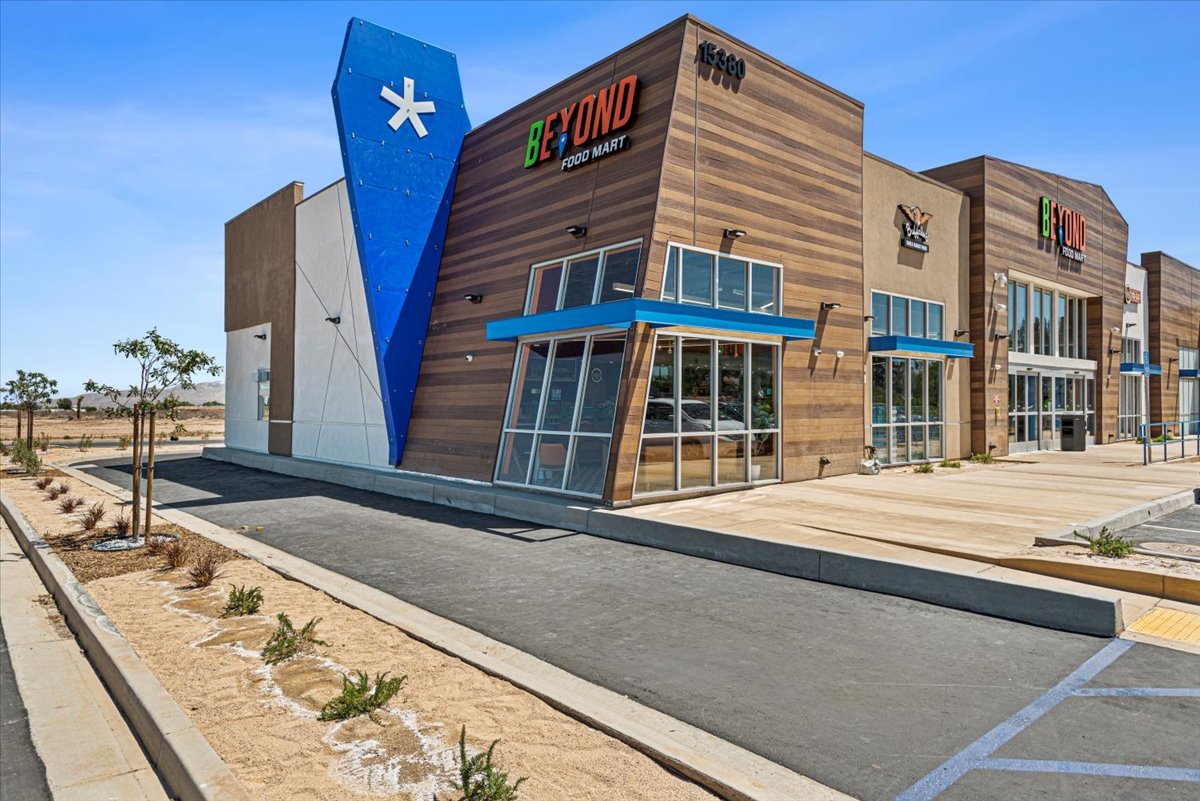
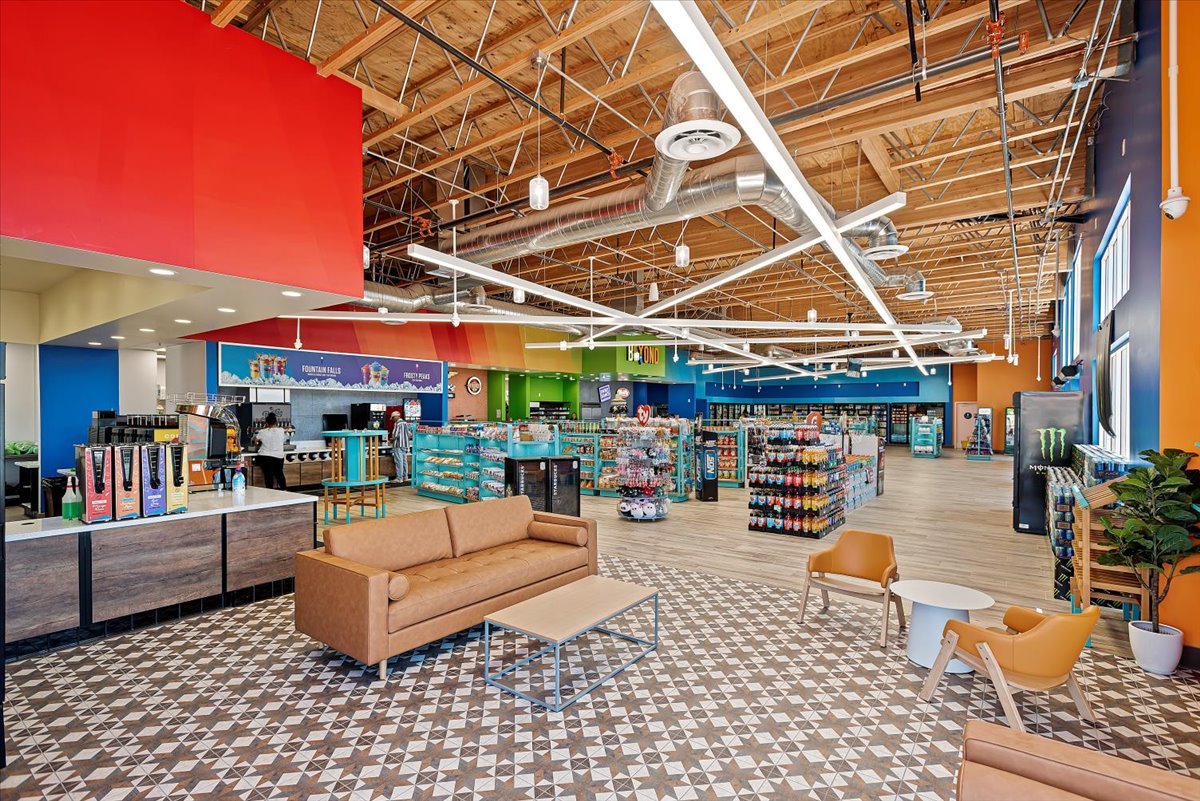
One shoot, properly licensed, can serve both clients simultaneously. The AM/PM locations I photographed in Fontana and Victorville are a direct example of this. The contractor received project completion portfolio images documenting the finished build. The business owner received a separate usage license for their own commercial marketing. Two clients, two license agreements, one professional shoot that served both purposes at the level each required.
That's the model that makes commercial build photography a legitimate business investment rather than just an expense line.
Who Needs This and Why
General Contractors and Construction Companies
Your portfolio is your most important sales tool. When a property owner, developer, or architect is evaluating contractors for a new project they're looking at what you've built before. If your portfolio images are phone photos taken by whoever was on site the day of the walkthrough, you're losing bids to competitors whose work looks better in photos regardless of whether their actual build quality matches yours.
Professional project completion photography gives you images that work in every context where you need to show your work. Your company website. Your LinkedIn. Your next RFP package. Contractor award submissions to organizations like the Associated General Contractors or the Building Industry Association of Southern California. Every one of those contexts rewards quality photography.
Architects and Design Firms
Architectural photography is a specific discipline that requires understanding how a building was designed to be experienced and translating that into a two dimensional image that communicates the same intent.
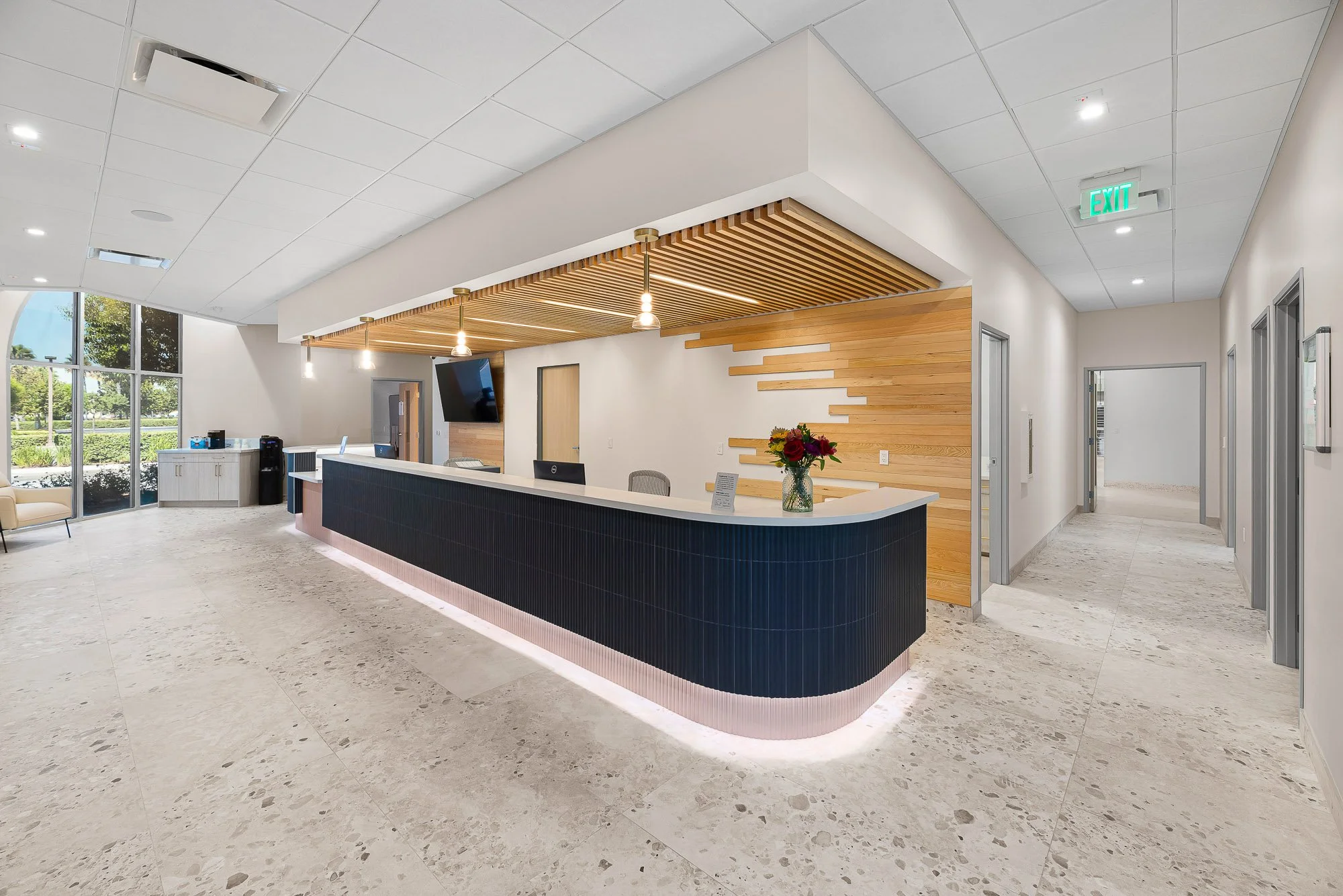
The Pet Emergency Animal Hospital reception I photographed is a good example of this. The slatted wood ceiling detail, the illuminated reception desk with its pink underlighting, the terrazzo floors, and the hallway leading back into the facility. That space was designed with intention at every detail level and the photography had to honor that intention rather than just document the room.
Architects submit completed projects for publication in trade and design publications, for AIA awards, and for inclusion in competitions and RFQ responses. Those submissions require images that meet publication standards and communicate the design vision accurately. That's a different requirement than a standard commercial photo and it gets treated as such on every architectural project I shoot.
Specialty Commercial Builders and Tenant Improvement Contractors

Retail buildouts, restaurant interiors, medical office improvements, dispensary builds, specialty commercial spaces. These projects have a design story built into every finish choice and every spatial decision. The photography has to tell that story.
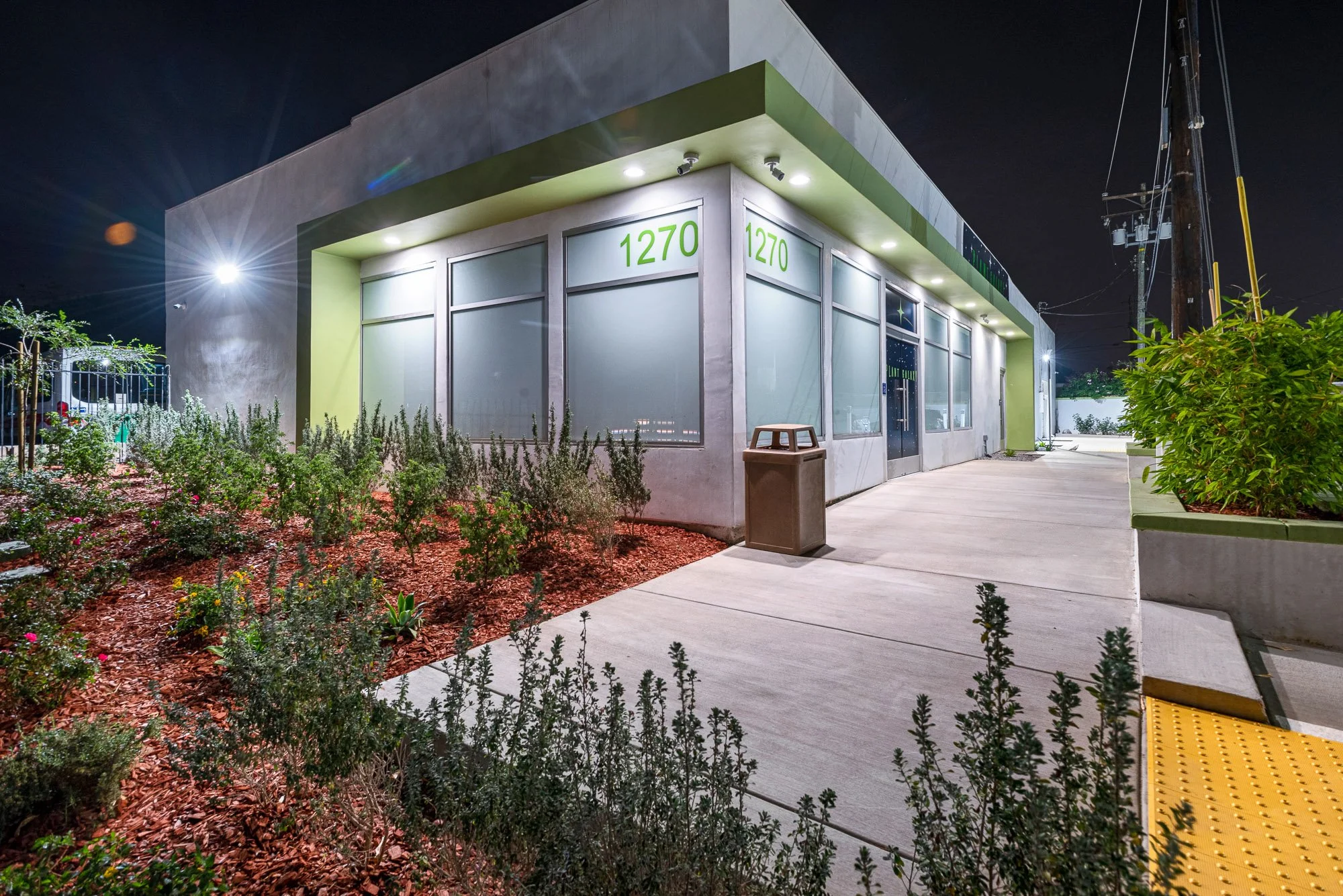
The Plant Galaxy dispensary images show exactly what this looks like. Clean white surfaces, green accent lighting, precise product display systems, and a spatial flow that communicates a specific brand experience. That's not just a room with shelves. It's a designed environment and the photography treats it that way.
Large Scale Commercial and Infrastructure Projects
Not every commercial project is an interior buildout. Some of the most compelling commercial photography happens at scale, documenting large infrastructure projects, site work, and construction progress at different phases of a build.
Watch what aerial and cinematic photography looks like on a large scale commercial project:
This dawn drone shoot over a large scale Southern California commercial project shows what aerial documentation delivers at the infrastructure level. The scale of the site, the context of the surrounding area, the relationship between the built environment and its location. These are the images that go into developer presentations, investor reports, and project milestone documentation.
Aerial photography for commercial projects starts at $100 for three shots and scales based on project scope and coverage requirements.
Copyright, Licensing, and What Contractors Actually Own
This is the conversation most photographers never have with their contractor clients and it's one of the most important ones.
Under United States copyright law, specifically 17 U.S.C. § 201(a) of the Copyright Act, copyright in a photograph vests initially in the author, meaning the photographer, at the moment of creation. This is true regardless of who commissioned the shoot or who paid the invoice.
What this means practically is that a contractor who hires a photographer and pays the bill does not automatically own the images. They own whatever usage rights were explicitly granted in the contract or invoice, nothing more.
For a contractor to own the copyright outright the arrangement must qualify as a work made for hire under 17 U.S.C. § 101. This requires either that the photographer is an employee of the contracting company, which is rarely the case with freelance commercial photographers, or that there is a written agreement signed by both parties explicitly designating the work as made for hire and the images fall into one of nine specific categories defined in the statute. Commercial photography does not automatically qualify.
What this means for contractors and builders hiring a photographer:
If you want to use project completion images on your company website, in your RFP responses, in award submissions, on LinkedIn, and in any printed marketing materials, you need a usage license that explicitly covers those uses. A vague invoice with no licensing language is not sufficient.
If you want to own the copyright outright you need a signed work for hire agreement before the shoot begins, not after.
If you commission photography that will also be used by the business owner or tenant in the completed space, both parties need separate usage licenses covering their specific intended uses.
I structure every commercial build engagement with clear licensing documentation upfront so every client knows exactly what they own, what they can use it for, and how long that license is valid. No ambiguity, no surprises after the invoice is paid.
What I Offer Contractors, Builders, and Architects
Commercial build photography is priced based on project scope, location, and intended usage rather than square footage the way residential real estate photography is. Every commercial engagement starts with a conversation about what you need, what the images will be used for, and how to structure the licensing so your investment is protected.
You can see the full range of commercial photography services on the commercial photography page and the services and pricing page.
For context on what commercial photography costs and what drives the price differences between projects, the commercial photography guide for IE and SGV businesses covers the full breakdown.
I'm based in Upland and serve contractors, builders, architects, and developers across the Inland Empire and San Gabriel Valley including Rancho Cucamonga, Ontario, Fontana, Upland, Claremont, Pomona, Chino Hills, and the surrounding corridor, as well as broader Southern California for larger scale projects. See the full service area on the where we shoot page.
For a look at the full range of commercial and real estate work visit the SoCal Home Photo portfolio.
Ready to Document Your Next Project?
If you're a contractor, builder, architect, or developer with a completed project that deserves professional documentation, let's talk about what that looks like for your specific situation.
Every commercial engagement starts with a consultation call so we can figure out exactly what you need, how the images will be used, and how to structure the licensing correctly from the start.
Call me directly at 909-234-2711 or visit the commercial photography page to learn more and get in touch.
For real estate photography and commercial photography across the Inland Empire and San Gabriel Valley SoCal Home Photo serves clients ranging from individual agents to contractors and developers across Southern California.